
Water Filtration
Modular filtration systems for safer drinking water and healthier learning environments
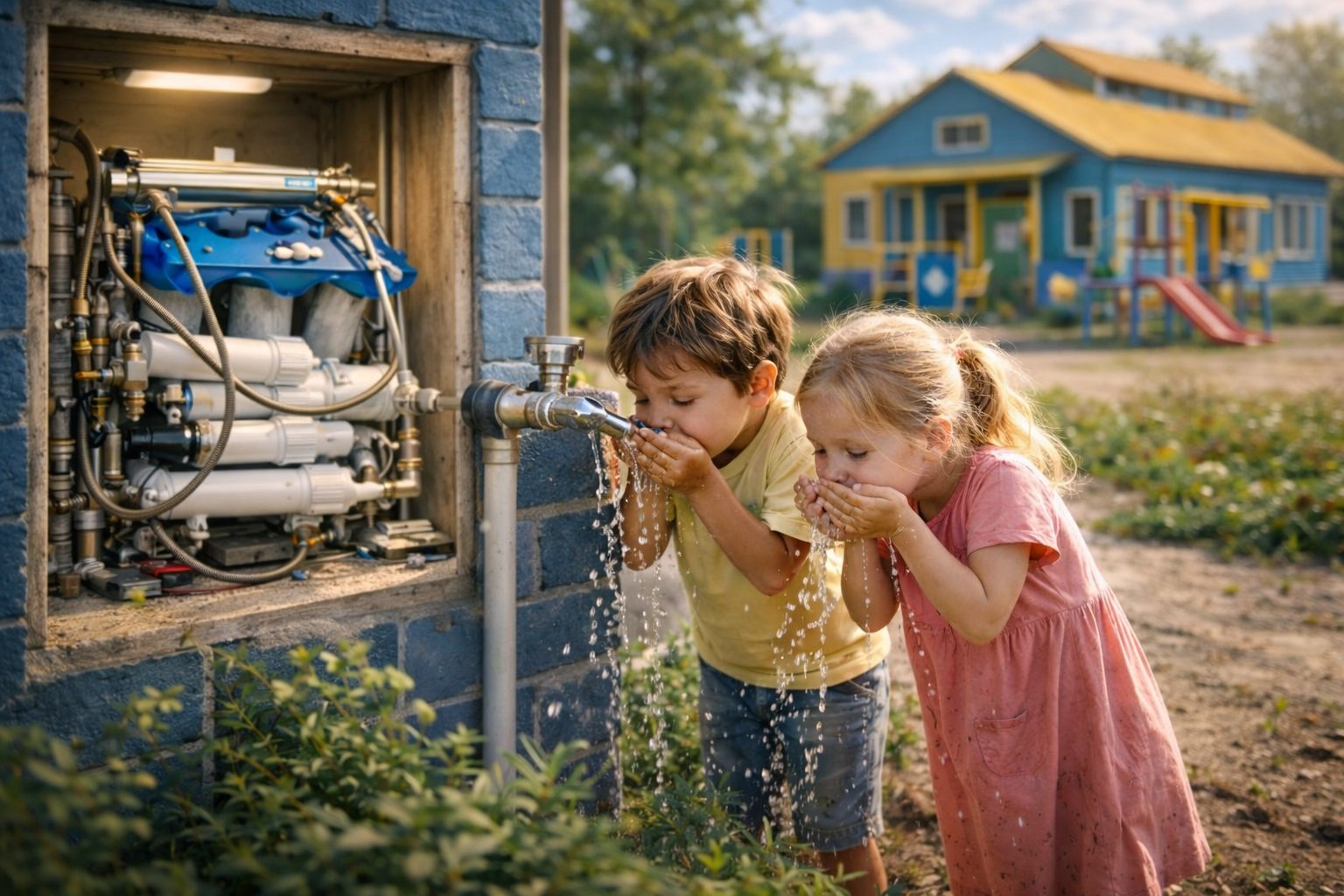
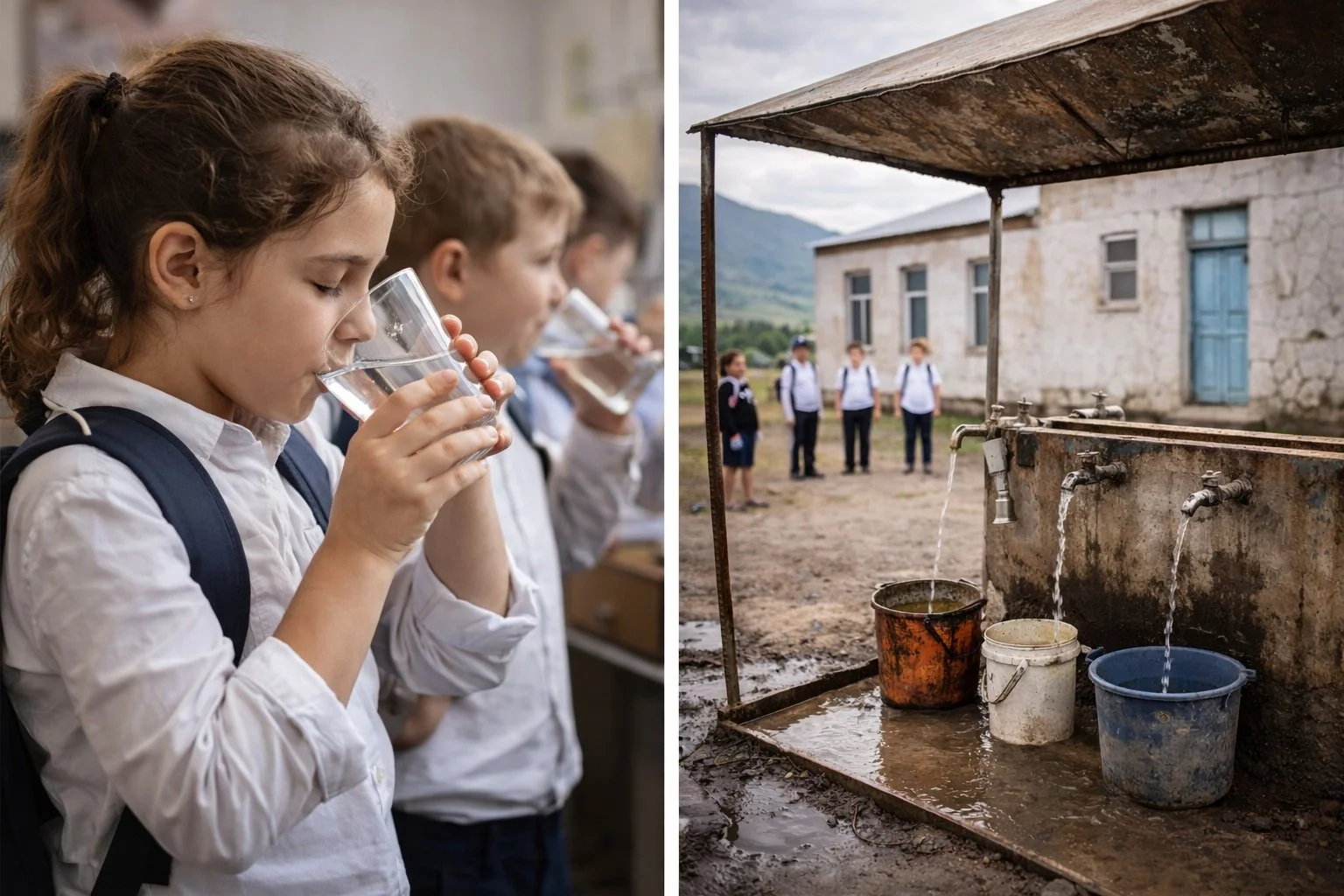
HOVAK develops practical, science-driven solutions that strengthen communities and improve everyday quality of life. One of our priority initiatives is a field-ready water filtration system designed for educational institutions—kindergartens and schools—especially in rural areas where water quality can be inconsistent due to local source conditions and aging infrastructure.
This project is built around a simple, human goal:
children should have reliable access to clean drinking water in their kindergarten or school—every day, without uncertainty.
The challenge we address
In many communities, drinking water quality can vary across seasons and locations. Even where water is generally available, institutions may still face:
noticeable changes in taste and odor,
turbidity and sediment,
inconsistent quality throughout the year,
limited local capacity for ongoing operation, maintenance, and verification.
For kindergartens and schools, reliability is critical. A solution must be easy to operate, maintainable, and transparent—not a “black box” that works temporarily and then fails due to unclear service routines or missing consumables.
We also recognize a practical reality: different sites have different water conditions. A one-size-fits-all system is rarely effective. That is why our approach is modular and evidence-based.
Our solution: a modular, multi-stage filtration unit
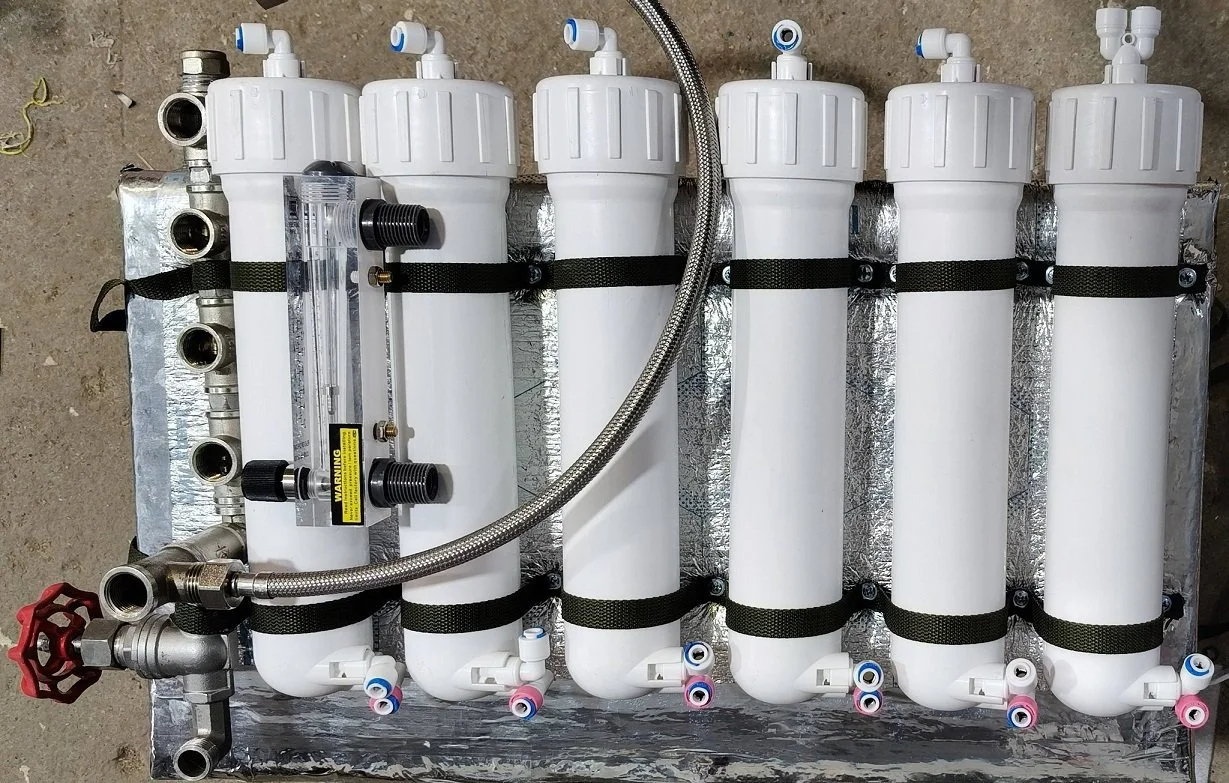
Our physicist-engineer has designed and assembled a working prototype of a compact, multi-stage water filtration system. The system is built for real institutional environments and follows four key principles:
Designed for real-world use
Modular configuration: filtration stages can be selected and adjusted based on local water characteristics.
Serviceability: components are accessible; maintenance routines are simple and documented.
Scalability: suitable for piloting across a limited number of sites and expanding to larger programs.
Practical deployment: compact footprint and installation logic that fits typical school/kindergarten settings.
Evidence-based configuration (not guessing)
Because water composition differs by location, we prioritize site readiness checks and basic water assessment before finalizing the configuration. The exact setup for each institution is determined based on:
local water source conditions,
practical site parameters (space, plumbing constraints, operating environment),
and partner requirements for verification and reporting.
(Final technical specifications and the exact stage selection are defined per deployment package and aligned with each partner’s framework.)
Planned scale: an initial phase of 15–20 installations
We are preparing a first deployment phase of approximately 15–20 installations for kindergartens and schools, prioritizing rural communities where institutions report persistent concerns about drinking water quality (for example, in parts of Ararat and Armavir regions).
This initiative is designed to be implemented through multiple funding and partnership pathways. The final list of institutions, timelines, procurement approach, and monitoring indicators are defined per partner agreement and funding framework, ensuring full compliance, transparency, and measurable results.
Implementation approach: from assessment to long-term operation
We structure deployments so institutions receive not only hardwar
e, but also a realistic operating model.
Phase 1 — Site assessment & planning
Site readiness check (installation space, access, basic plumbing conditions, safety considerations)
Baseline understanding of local water conditions (scope defined per project framework)
Configuration selection and installation plan
Documentation package for institutional approval and partner reporting
Phase 2 — Installation & commissioning
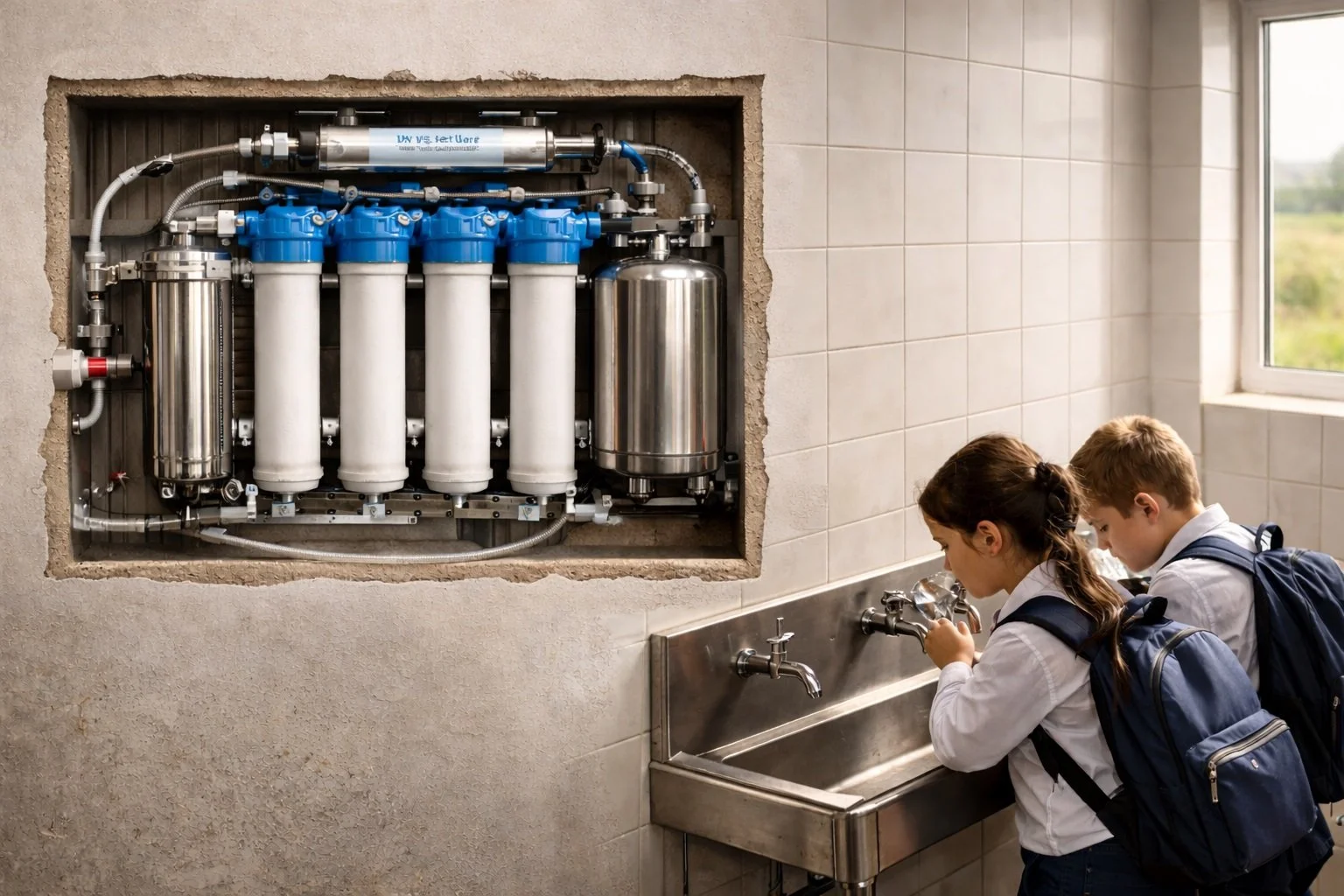
Installation of the filtration unit
Initial test run and commissioning
Clear labeling and basic operating instructions for staff
Handover package: practical guidance and a simple troubleshooting flow
Phase 3 — Training & institutional ownership
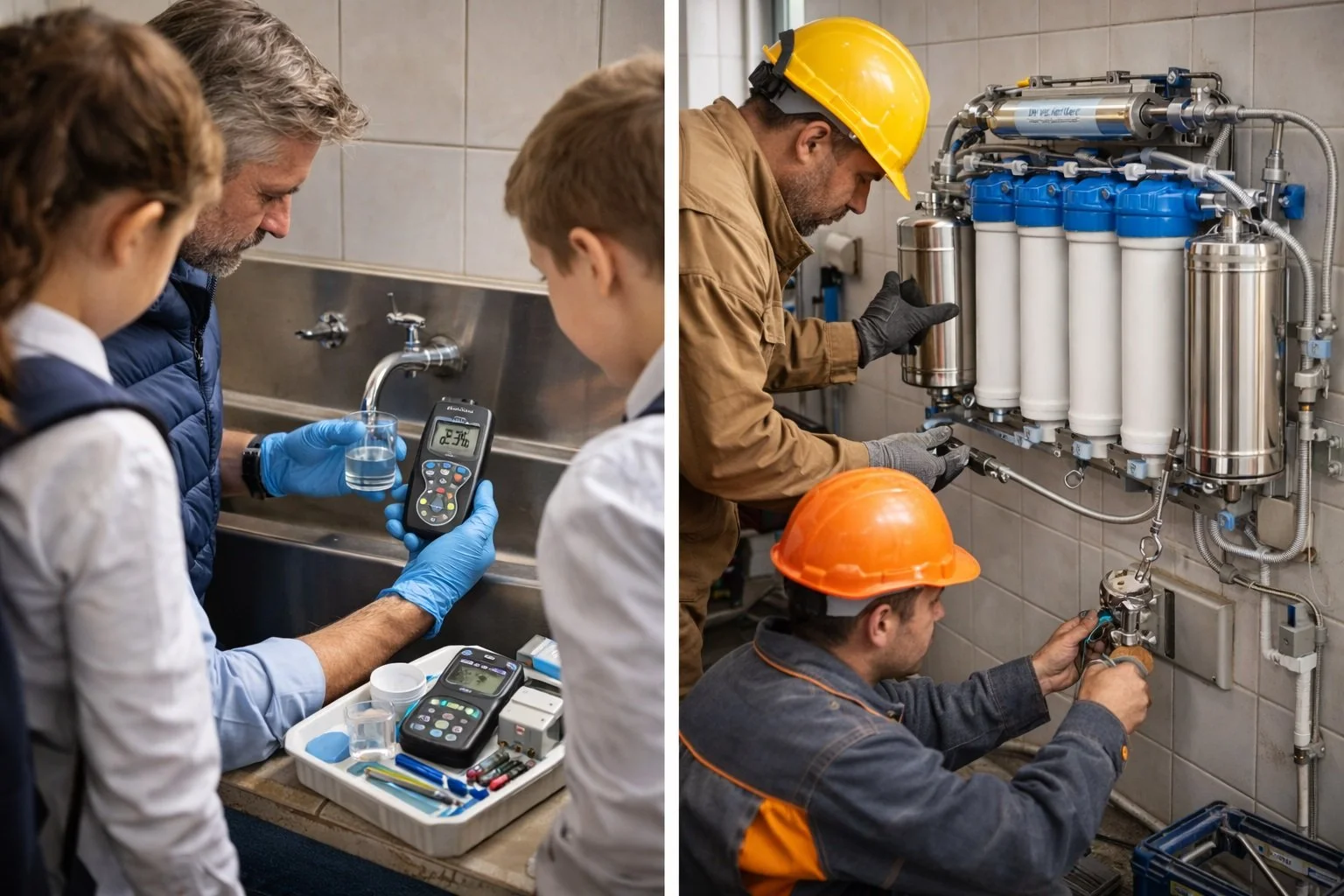
Short, practical training for designated staff (operation, safe handling, routine checks)
Maintenance schedule: what to check, how often, and who is responsible
Logbook system for inspections, consumables replacement, and incident reporting
Phase 4 — Monitoring, follow-up & learning
Periodic performance verification (as required and feasible within the project scope)
Consumables replacement tracking and optimization
Feedback collection from staff to improve usability and reduce operational burden
Reporting package: results, lessons learned, recommendations for scaling
(Exact scope—testing parameters, monitoring frequency, and reporting format—is tailored to each funding and partner framework.)
Sustainability: built to keep working beyond the first phase
Many water projects fail not because the technology is wrong, but because maintenance and consumables are not planned. We design sustainability from the start:
Predictable consumables plan: clear replacement cycles and basic inventory logic
Simple operational routines: checklists and training that are realistic for school staff
Local capacity building: documentation and training so institutions can operate confidently
Scalable support pathways: a model that can grow into local service partnerships
The goal is not just installation—it is long-term reliability.
Quality assurance and transparency
We prioritize transparency so parents, institutions, and partners can trust the process without exaggerated claims. Depending on the project framework, verification may include:
baseline and follow-up checks (scope defined per project),
operational uptime and maintenance compliance,
staff feedback and ease-of-use indicators,
documentation of consumables replacement cycles,
partner-ready reporting and an evidence package for future scaling.
We avoid overpromising and commit to outcomes that can be documented and responsibly verified within each project’s scope.
Designed for different grants: modular project structure
To ensure compatibility with different donor priorities, we structure the initiative as modules that can be combined or supported separately:
Module A — Pilot deployments: installation in a limited number of institutions + operational support
Module B — Water assessment & configuration: baseline checks and evidence-based design per site
Module C — Training & materials: staff training, operating manuals, logbooks, signage
Module D — Monitoring & reporting (MRV): verification, documentation, partner-ready reporting
Module E — Scaling & service model: local maintenance pathways and broader roll-out plan
This website presents the overall concept and intended direction. Each grant or partner agreement defines the specific scope—number of sites, configuration, procurement, monitoring parameters, and budget—aligned with the framework’s rules and compliance requirements.
Partnerships we welcome
We invite collaboration with:
kindergartens and schools,
municipalities and community administrations,
laboratories and water-quality specialists (verification support),
donors, foundations, and corporate partners,
local technicians and service partners.
Call to action
If you represent a kindergarten, school, municipality, donor organization, or technical partner and want to support safe drinking water access for children, we welcome your message. We can prepare a deployment plan tailored to your program scope, compliance requirements, and reporting standards.
Let’s bring reliable drinking water to the places where it matters most.