Solar-Thermal Water Infrastructure for Water Security, Climate Resilience, and Scalable Deployment
The air above every coastline and every mountain reservoir carries a river that nobody taps. Warm, humid air holds enormous quantities of fresh water in vapor form — replenished daily by the sun, delivered free of charge by the wind. The only reason humanity still makes fresh water the hard way is that catching that river normally costs enormous energy: energy to move the air, and energy to make the cold that wrings the water out of it.
HOVAK Water is built on a simple observation: in the right landscape, both of those costs are already paid. A sun-heated slope can move the air. A large natural water mass can supply the cold. What remains is engineering — and that is the part we do.
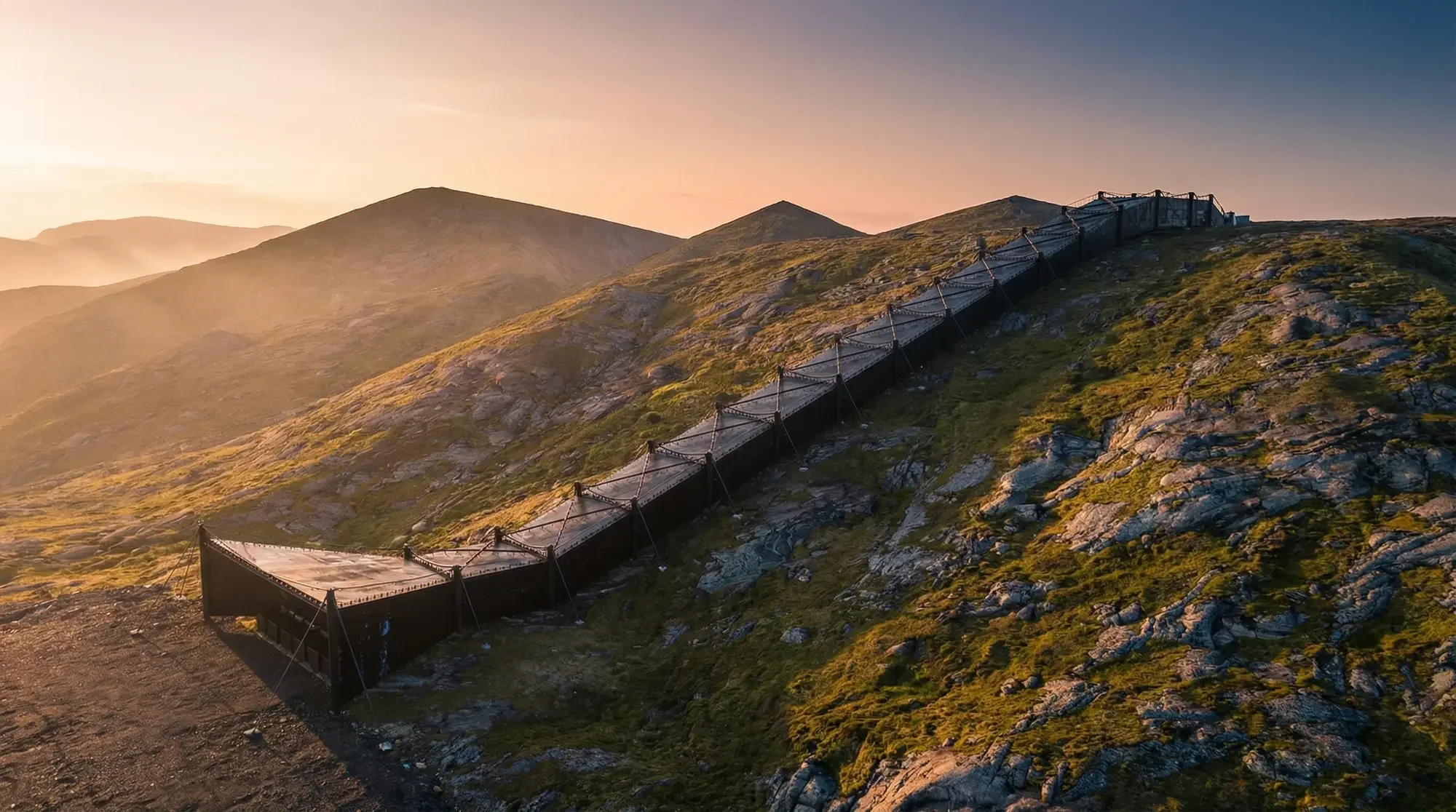
HOVAK Water is the water direction of the HOVAK platform: a solar-thermal, terrain-adapted infrastructure concept for producing fresh water at scale, developed alongside the Solar Compression Power Station and sharing its engineering DNA — natural driving forces, standard industrial components, phased deployment, and century-minded design.
Why HOVAK Water Matters
In arid and semi-arid regions, the standard answers to water stress are all hard. Desalination plants are energy-hungry, capital-heavy, and tied to centralized coastal infrastructure. Trucked water is the most expensive water there is. And conventional atmospheric water generators spend most of their electricity on one thing: making cold. The refrigeration bill is the real price of every liter they produce.
Our engineering approach attacks exactly those cost centers:
solar heat as the primary energy source — the airflow is driven by the sun, not by fan farms;
natural cold instead of refrigeration machinery — supplied by the sea or by a deep natural reservoir;
site-adapted rather than standardized infrastructure — the terrain is a working component, not an obstacle.
Technology Approach (High-Level, Non-Confidential)
The water beading on a cold glass on a summer day — that is the entire principle. Warm air can carry a great deal of water vapor; cooled below its dew point, it gives that water back. Every morning dew and every fog works this way. The engineering questions are only ever these two: how do you move enough warm, humid air, and where do you get the cold without paying an electricity bill for it?
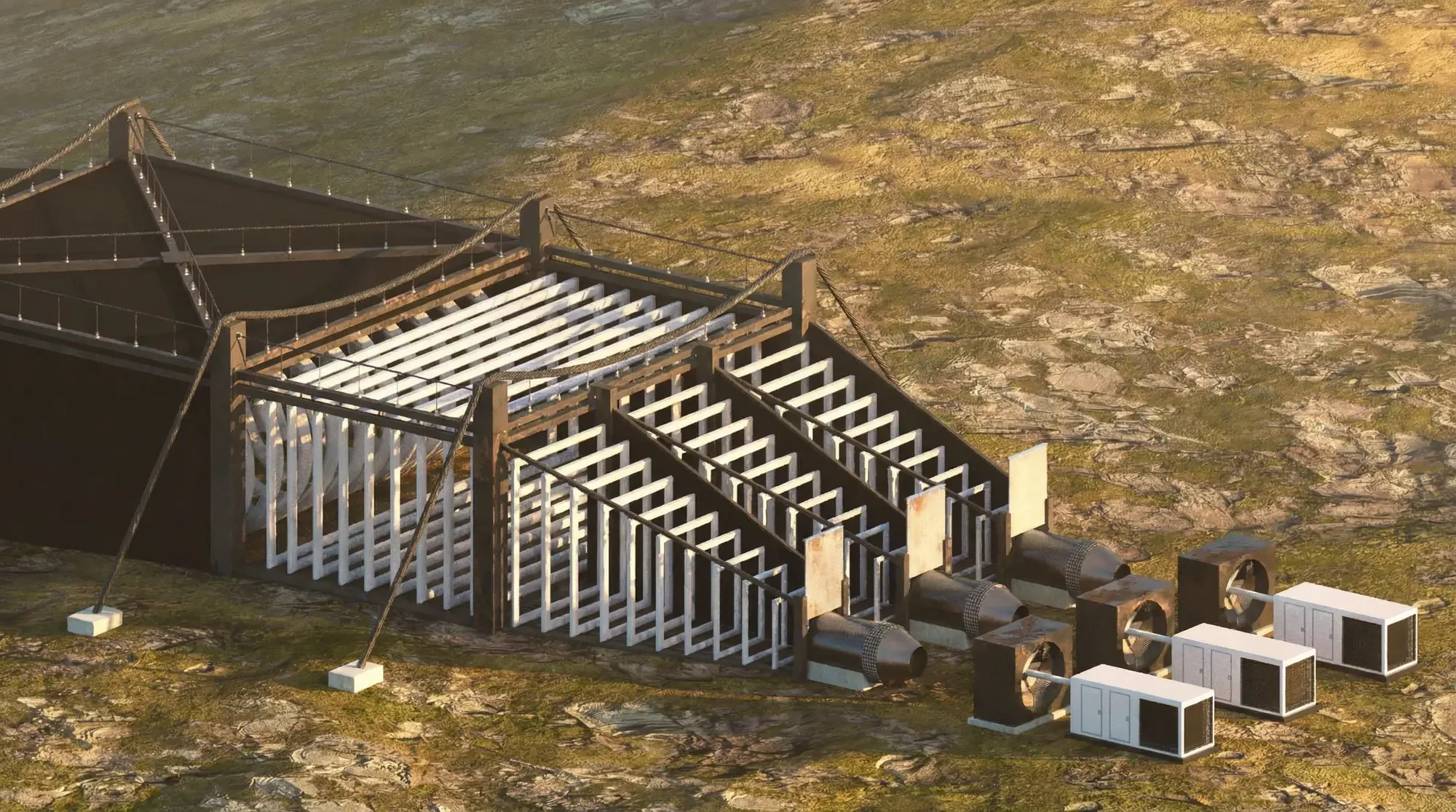
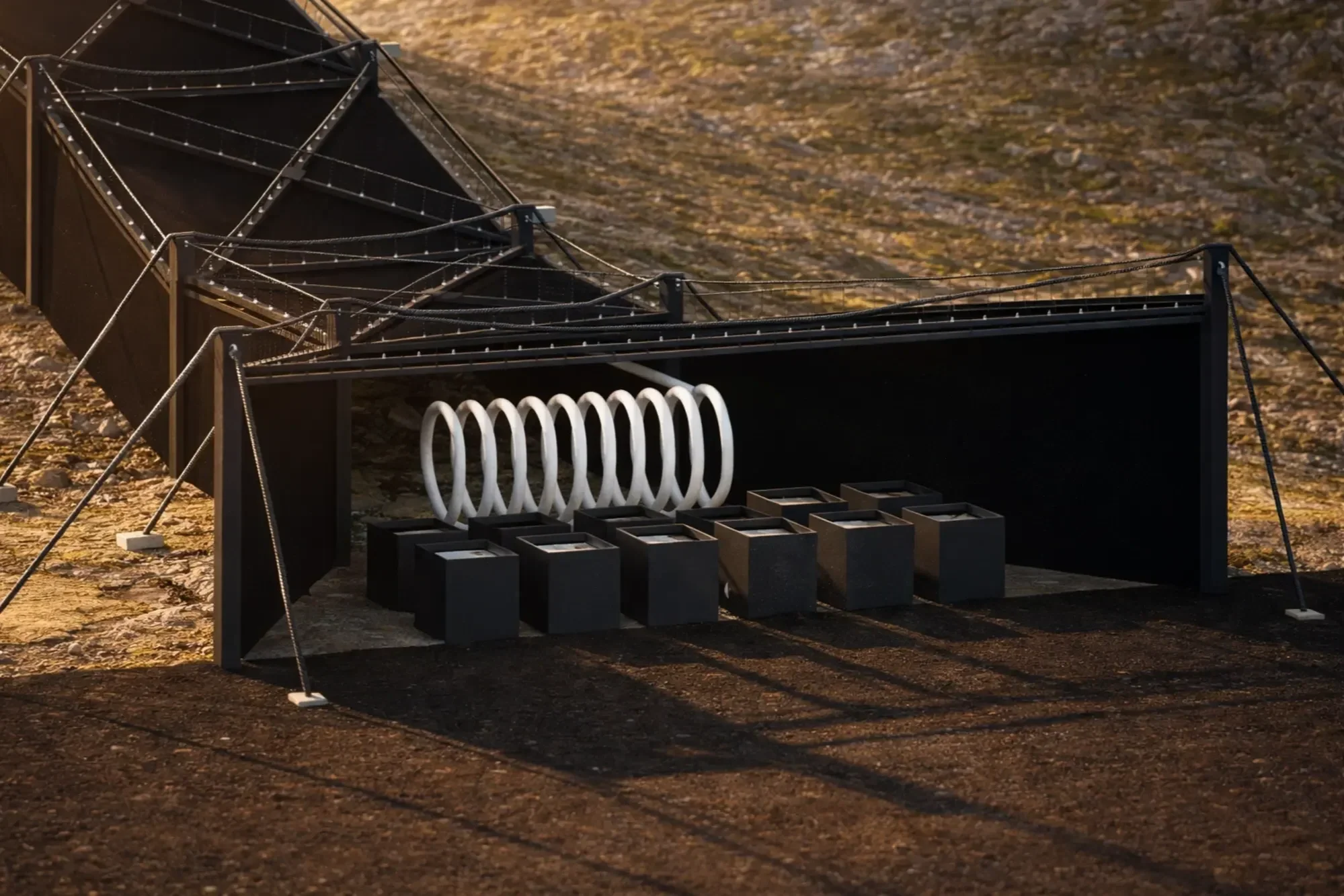
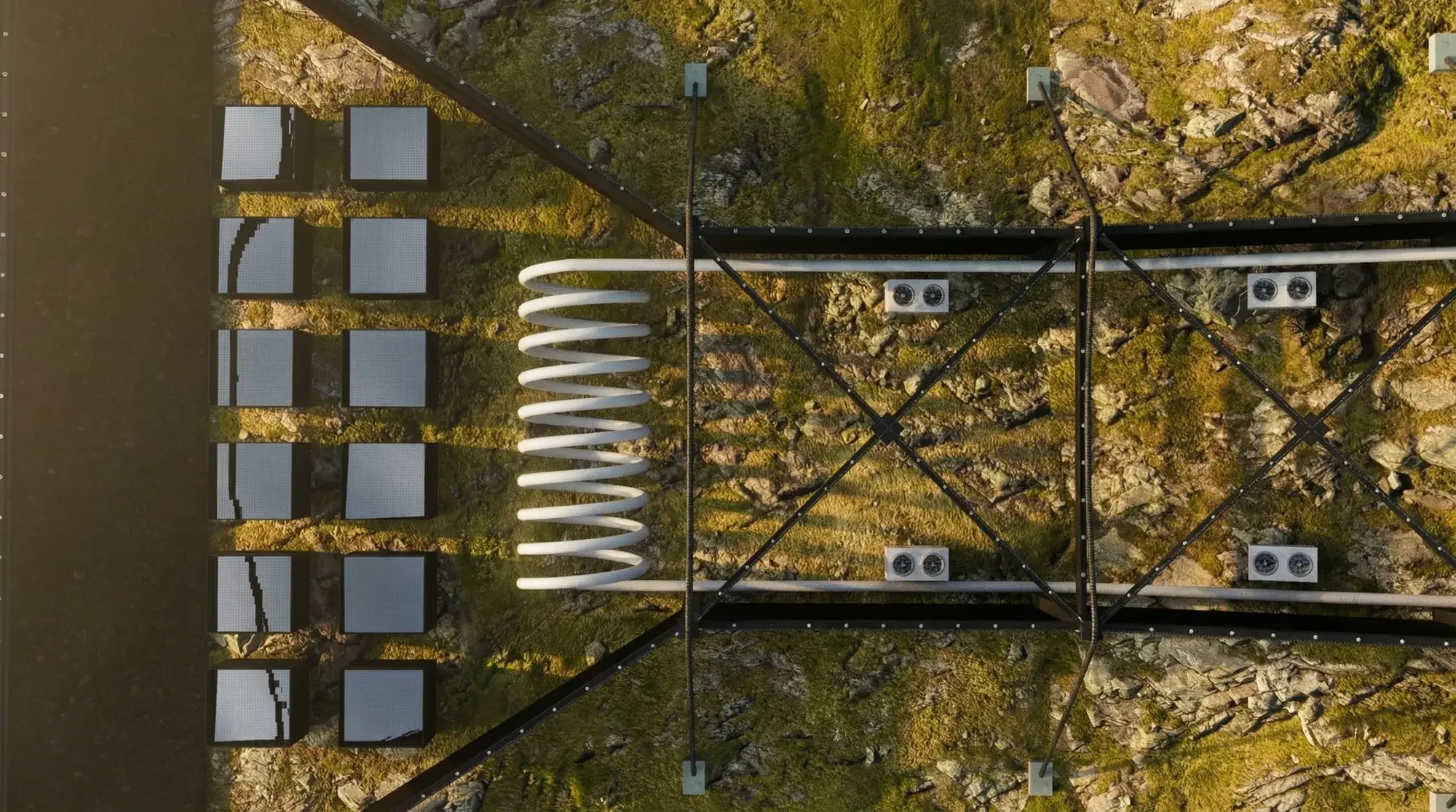
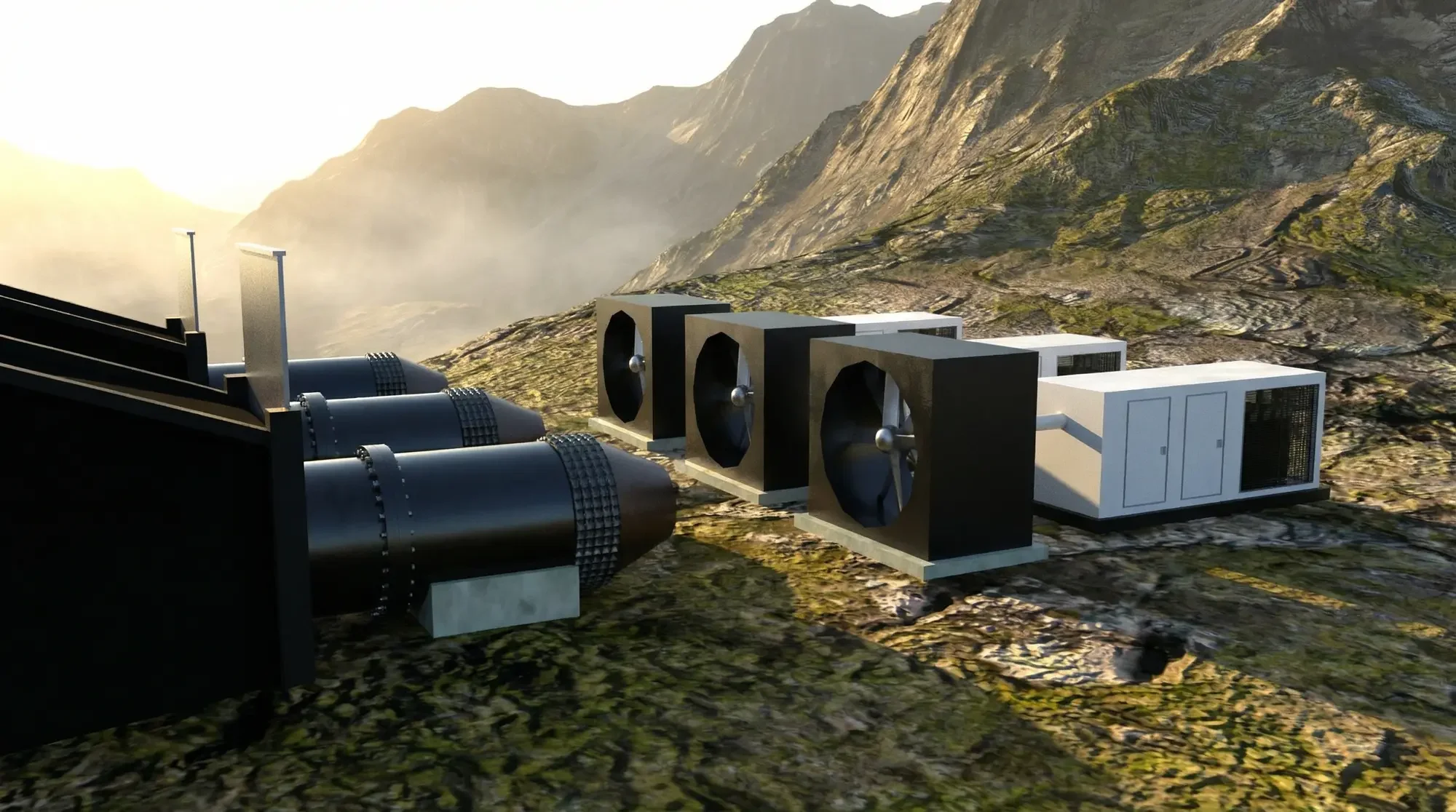
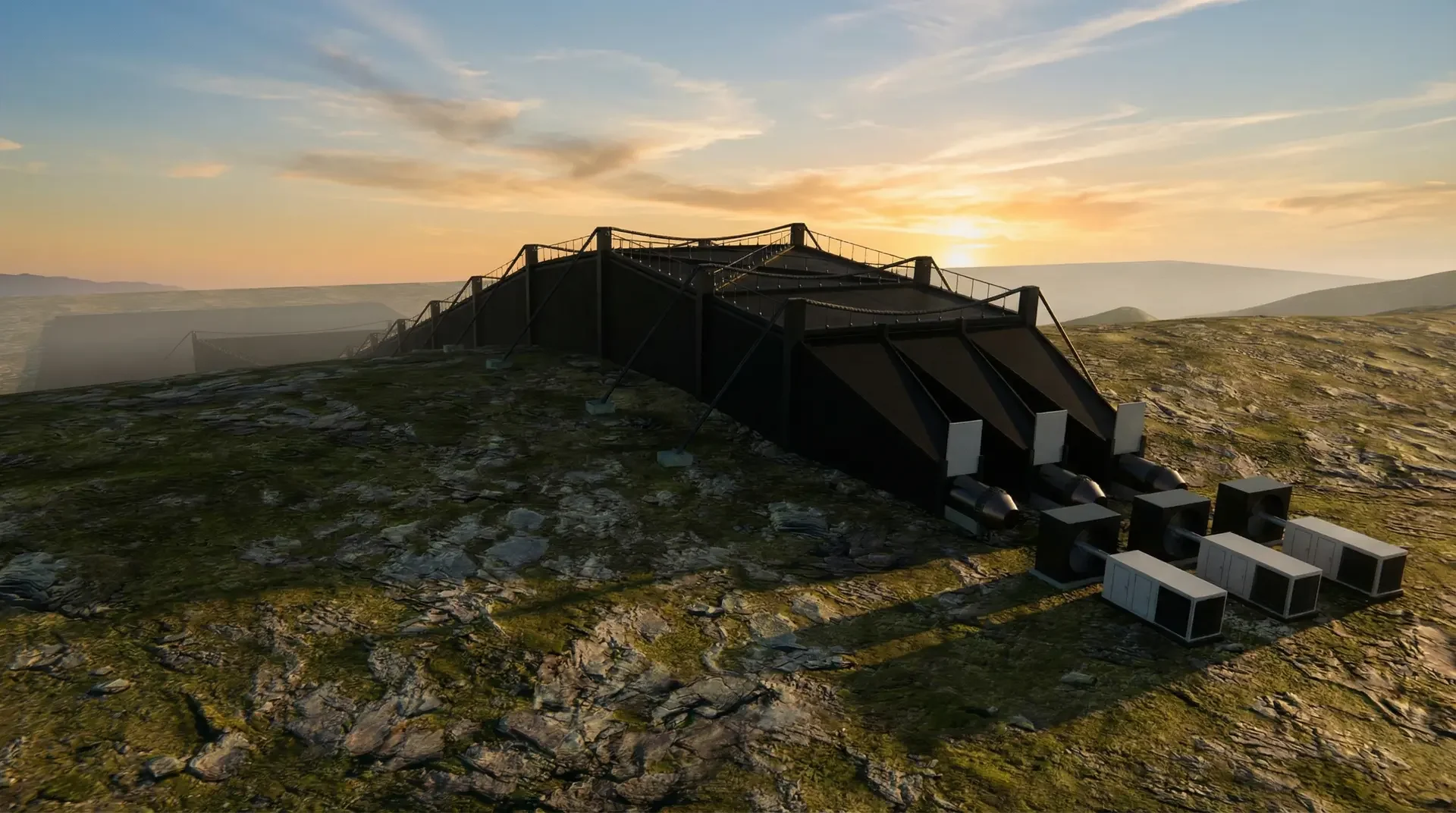
HOVAK Water answers both with the landscape. The solar draft of the station — the same terrain-driven airflow that generates electricity in HOVAK Energy — moves large volumes of air without mechanical fans. Humidity enters the stream naturally: from the atmosphere itself, from the air layer above a water surface, or, in the coastal configuration, from controlled contact with seawater. Condensation then happens on surfaces kept cold by a natural water mass rather than by a refrigeration plant. The vapor becomes fresh water. The fresh water becomes the product.
That is the public logic of the system. The specific engineering that turns it into a competitive machine — the hydraulic architecture, thermal integration, control methods, and configuration optimization — is part of the protected technical package, disclosed through NDA and due-diligence frameworks, with new patent filings for the water-integration architecture now in preparation.
Three Configurations, One Machine
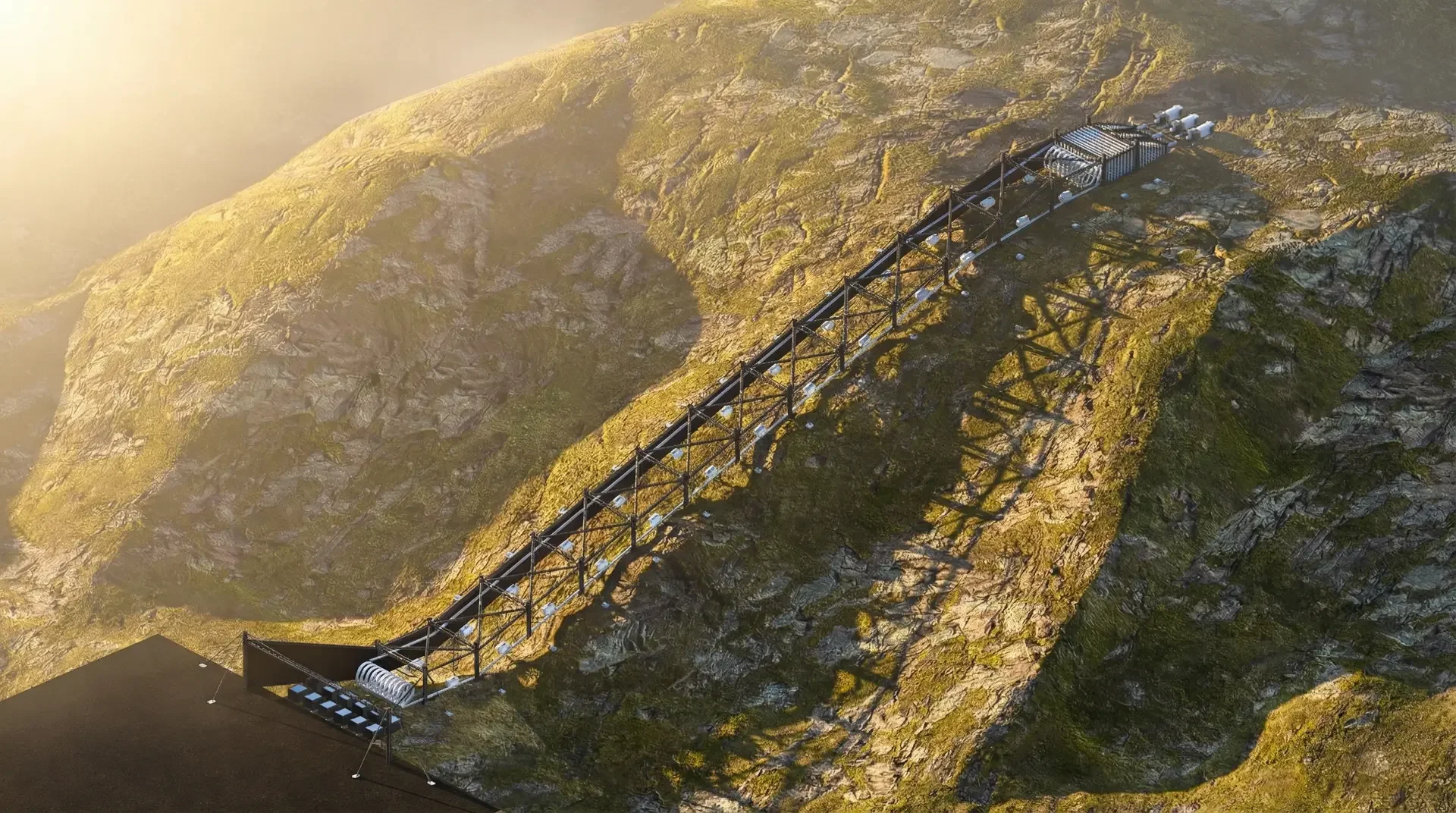
1) By the sea — the strongest fit. For coastal arid regions, the sea solves the hardest problem of all: an unlimited moisture source. Seawater humidifies the airflow; the condensers return it as fresh water — a desalination plant without membranes, boilers, or brine chemistry. This marine configuration is the one developed in most detail in the original design materials, executed in corrosion-resistant materials, and it is where the production economics look strongest.
2) At a mountain reservoir. Inland, the station pairs with an existing deep reservoir or lake. The water body supplies the natural cold for condensation; the station harvests moisture from the atmosphere and the air above the water surface — and, by deliberate design, never draws down the reservoir itself. It adds water security to a water body instead of subtracting from it. Combined with HOVAK Energy, a single installation produces both electricity and drinking water, shifting between the two as demand requires.
3) Dry inland sites. Even without a large water body nearby, the atmosphere itself is a source: air always carries vapor, and the physics of the dew point sets the honest limit of what can be harvested. The same infrastructure, sized and configured for pure atmospheric collection, can serve settlements where humidity patterns allow. We state this configuration’s limits as plainly as its promise: yield depends on the air, and we would rather size a system honestly than promise rain in a desert.
Integrated Infrastructure Logic
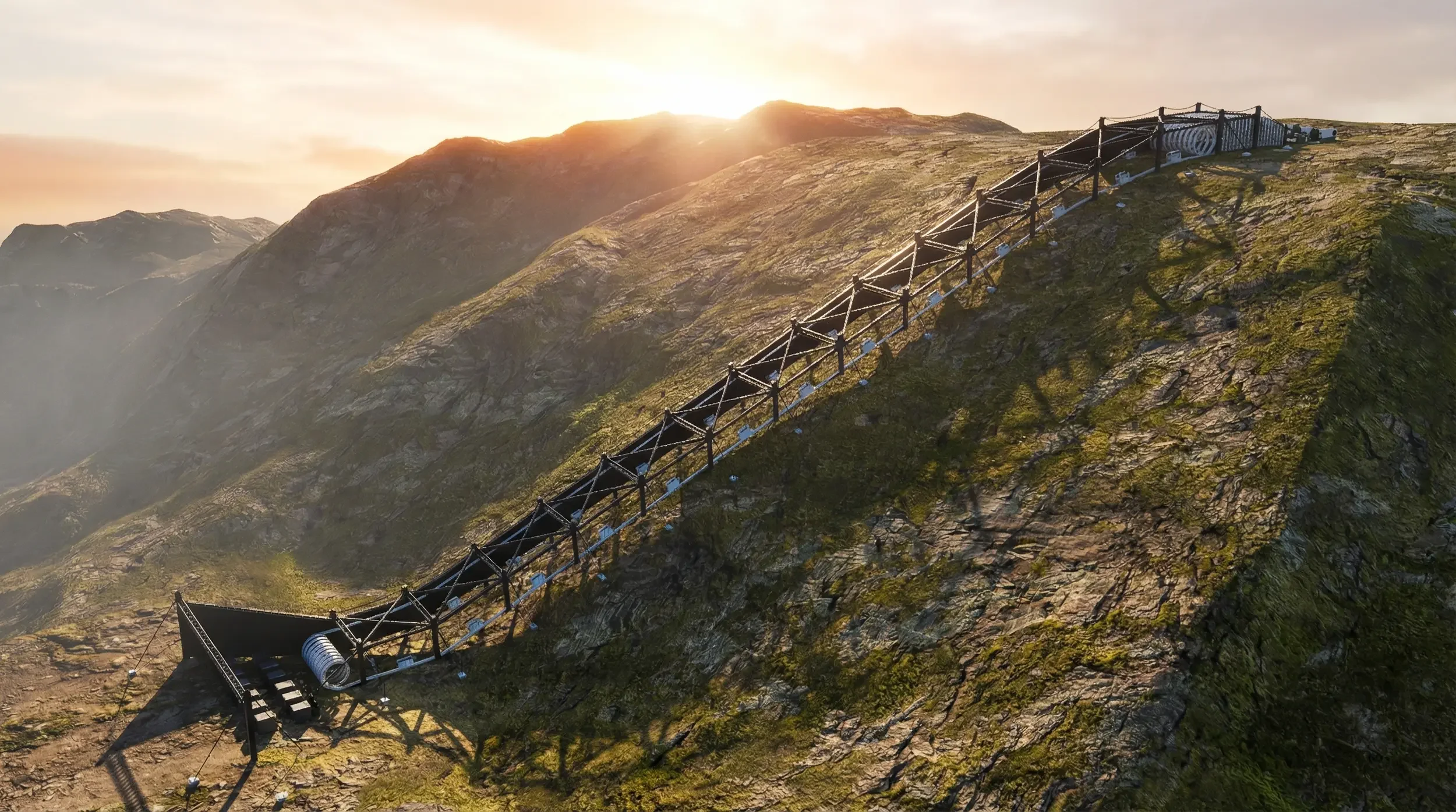
HOVAK Water is conceived as infrastructure, not as an appliance. Within the platform, electricity generation and water production are two outputs of one asset: the energy side can power circulation and auxiliary systems, water delivered at elevation can serve hydraulic and storage purposes, and the operating mode can shift with the seasons — more power when reservoirs are full, more water when they are not. For a municipality or an investor, that is long-term optionality built into a single piece of infrastructure.
Preliminary Performance and Economic Benchmarks
(Model-based; configuration-dependent; site-specific; subject to pilot validation and final engineering)
Current modeling and project materials indicate:
Water production cost (model range): USD 0.2–0.4 per m³
Indicative daily production per 1 m² of useful system area: ~30–40 liters
Indicative construction cost per 1 m² of useful area: USD 30–60
Thermal-energy recirculation may reduce energy expenditure by ~2–3×
Reference water-mode service life in stated assumptions: up to ~50 years
One number deserves a pause: USD 0.2–0.4 per cubic meter. If pilot validation confirms that range, this water would sit among the least expensive engineered fresh water available anywhere — with sunlight as the primary energy input. These figures are not guarantees; they are model-based indicators to be confirmed through site data and pilot performance, and we publish them as ranges for exactly that reason.
Geographic Fit and Deployment Context
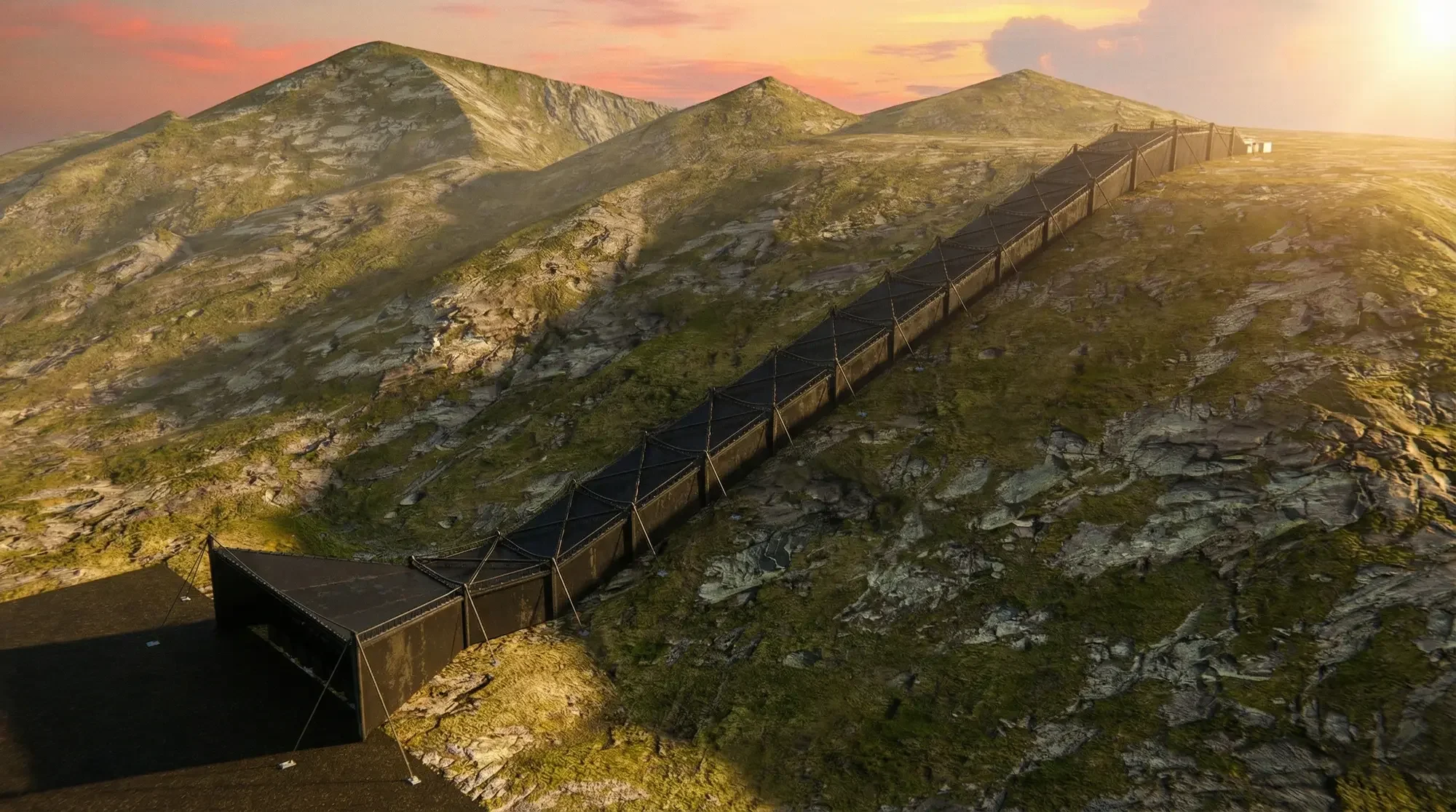
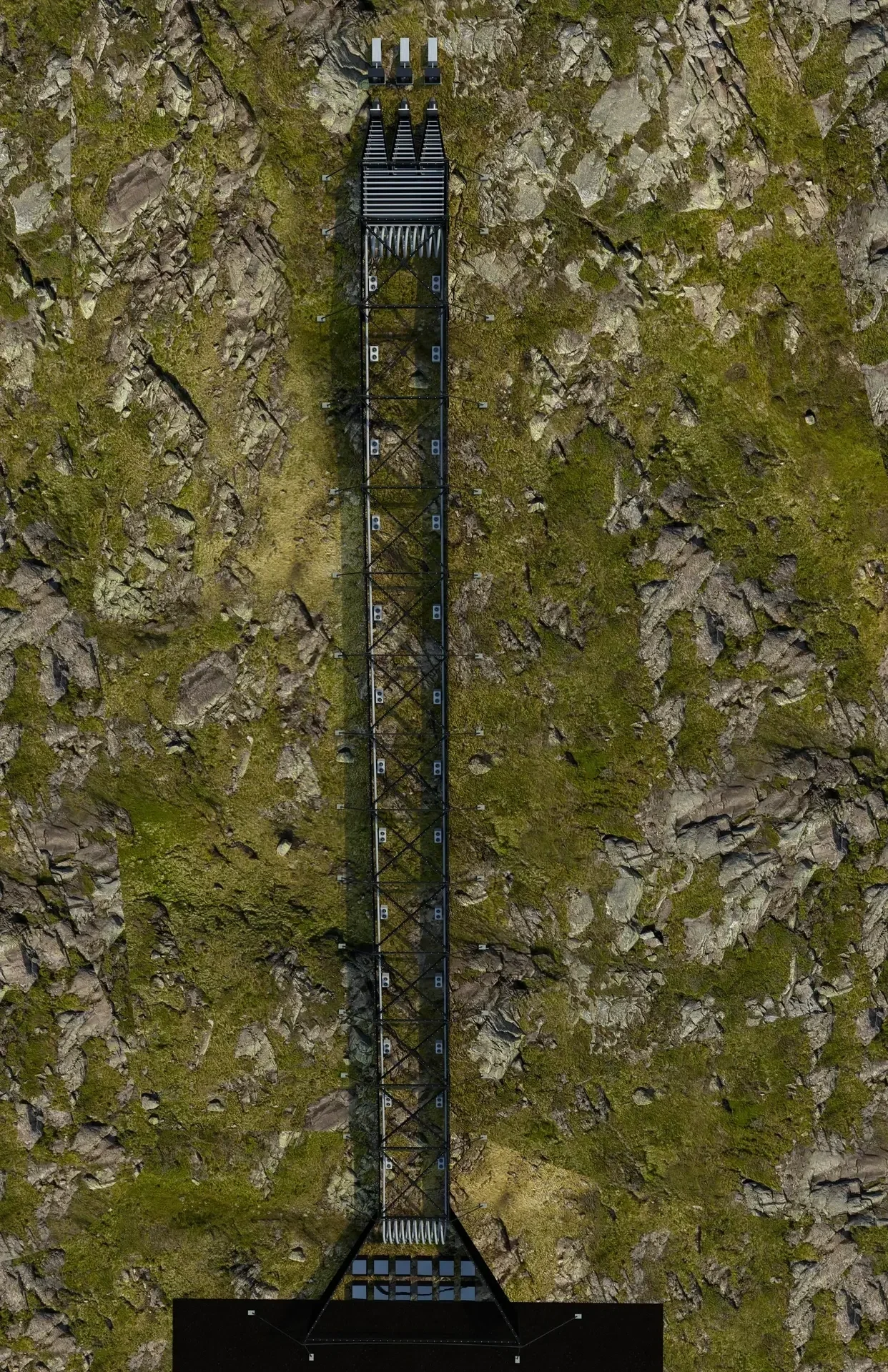
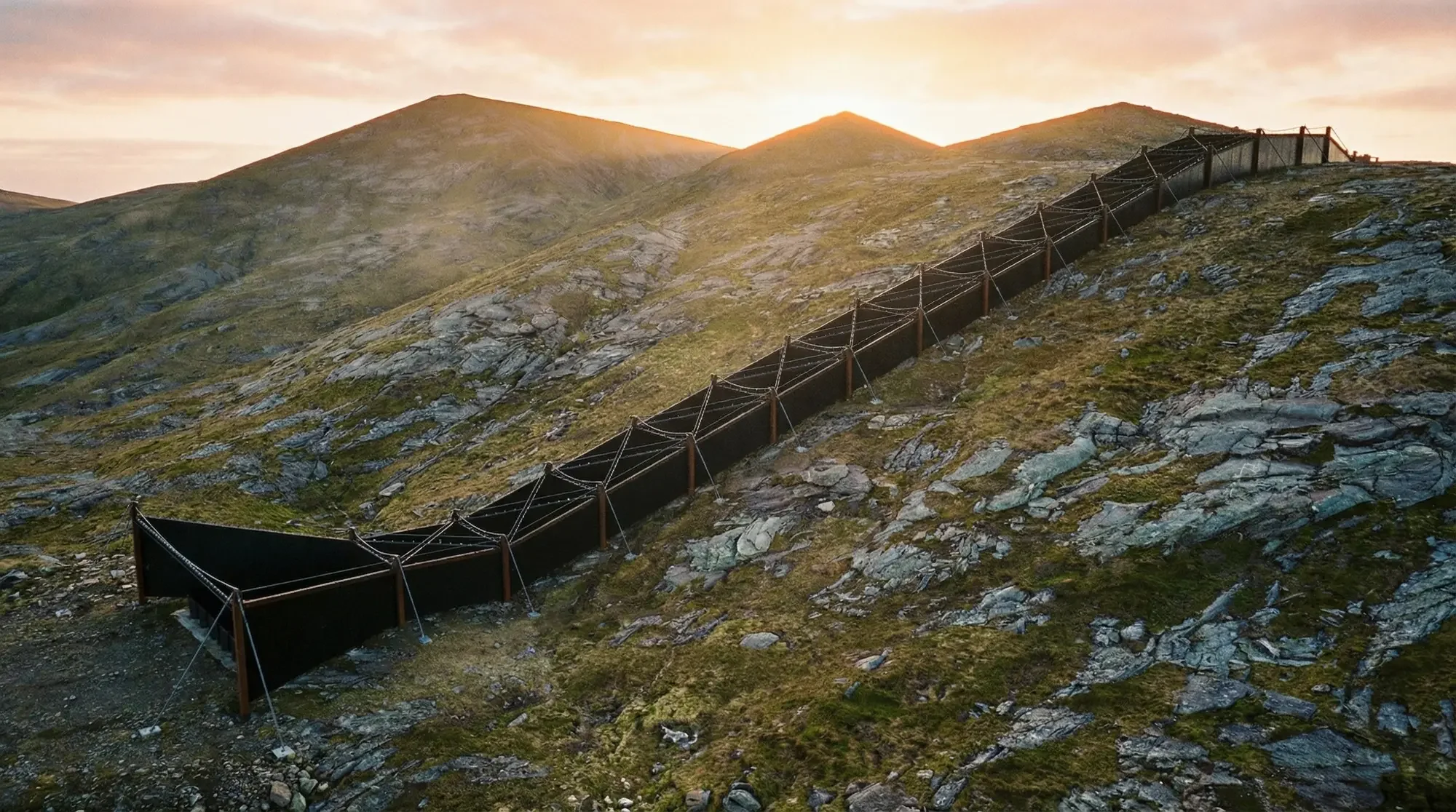
The concept fits best where three things meet: strong solar radiation, real water demand, and terrain suitable for a natural-draft system — reference configurations assume roughly 200 meters of usable slope elevation. That combination describes much of the world’s water-stressed geography: the coastlines of arid regions, and the mountain reservoirs and lakes of ranges like the Caucasus, where seasonal water security and energy supply are twin concerns. Final suitability is always determined by site screening and modeling, not by the map alone.
Implementation Pathway
Site Screening & Feasibility — climate, terrain, cooling resources, demand assessment, modeling, permitting constraints.
Pilot Engineering & Validation — design, instrumentation, water-quality verification, energy mapping, operational testing.
Demonstration Deployment — integrated demonstration with seasonal performance reporting and cost-model refinement.
Commercial / Public Scale-Up — project financing, EPC partnerships, and deployment in target regions.
Each phase exists to de-risk the next: no one is asked to fund a demonstration before the pilot has reported, or scale-up before the demonstration has run its seasons.
Commercial Relevance
For investors and infrastructure partners, HOVAK Water offers:
potentially favorable water economics under suitable conditions — with the dominant cost of competing approaches, purchased energy, structurally reduced;
a renewable foundation — the primary energy input is sunlight on a slope;
long-lifecycle orientation — engineered infrastructure with a reference water-mode service life up to ~50 years;
terrain-adapted design for exactly the geographies where standardized solutions fail;
optional energy–water integration — one asset, two products, demand-driven balance.
Target applications include municipal supply augmentation, industrial water production, remote and coastal utility solutions, climate-resilience portfolios, and long-term regional water-security investments.
Development and Grant Relevance
For climate funds, development agencies, and public institutions, HOVAK Water is adaptation infrastructure in the most literal sense: it converts renewable energy and natural cold into water security for regions where climate change arrives first as drought. It aligns with funding priorities in water access, climate adaptation, renewable-based utilities, regional resilience, and reduced environmental burden — and its phased pathway maps naturally onto milestone-based grant governance.
Disclosure and IP Positioning
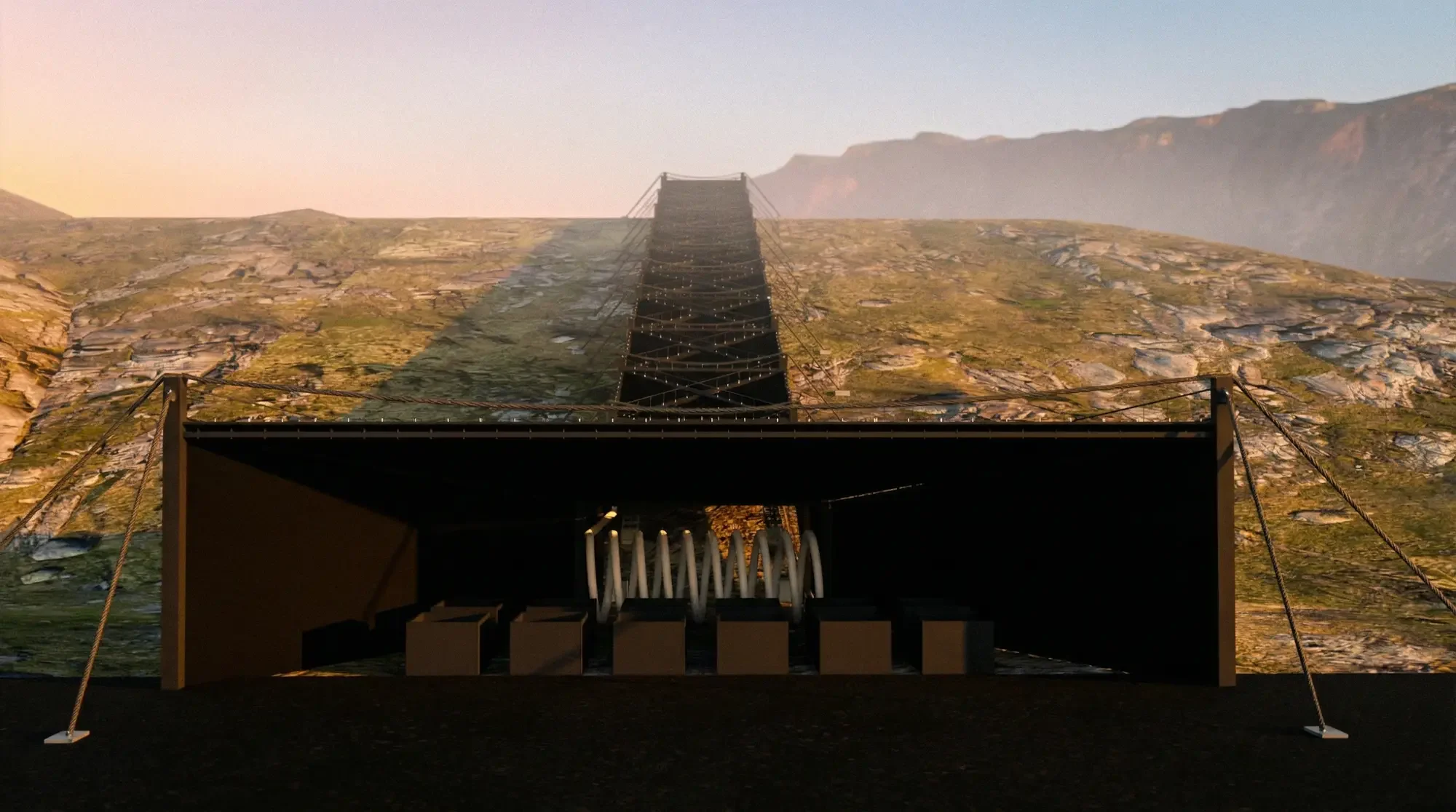
Public materials describe the problem, the system logic, the deployment approach, and benchmark ranges with explicit caveats. Detailed geometry, configuration optimization, control methods, and site-specific engineering parameters are reserved for protected technical workflows (NDA, due-diligence data rooms, scoped engineering engagements). New patent filings covering the water-integration architecture are in preparation; the platform’s earlier patent history (Armenian patent AM 2958 A and a WIPO PCT application) is documented and public.
Partnership Invitation
We are seeking:
Pilot site partners — coastal locations in arid regions, or municipalities and operators of deep reservoirs and lakes, with data access and local coordination;
Technical partners — thermal systems, condensation and heat-exchange engineering, fluid dynamics, water quality, EPC planning;
Funding partners — grant, philanthropic, blended-finance, and mission-aligned investment structures;
Institutional partners — municipal, regional, and national bodies responsible for water security.
And if you are none of the above but live where water is the daily question — write to us anyway. Every conversation starts the same way: tell us about your coast, your reservoir, or your driest month.
Current Position and Near-Term Priorities
HOVAK Water is a pre-commercial infrastructure concept advancing toward pilot validation. Current priorities: qualification of candidate sites (coastal and reservoir), pilot engineering and validation-framework design, completion of IP protection for the water-integration architecture, and partnership and financing alignment for the first demonstration.
Positioning Statement
HOVAK Water is building a new category of renewable water infrastructure: solar-driven, terrain-adapted, and designed for long-horizon deployment in the regions where water stress is not a forecast but a daily fact.
HOVAK Water — engineered for water security, designed for scale.
HOVAK Water — FAQ
1) What is HOVAK Water?
HOVAK Water is the water direction of the HOVAK platform: a solar-thermal, terrain-adapted infrastructure concept for producing fresh water at scale — from seawater in coastal configurations, and from atmospheric moisture where the station pairs with a natural reservoir or operates inland.
2) What problem does it solve?
Fresh water in dry regions is expensive because producing it takes enormous energy — desalination plants, refrigeration-based atmospheric generators, or trucked delivery. HOVAK Water restructures that cost: sunlight drives the airflow, and natural water masses supply the cold, so the two largest energy bills of conventional approaches are largely removed.
3) How does it work, in plain terms?
Like the water that appears on a cold glass in summer. Warm air carries water vapor; meeting a surface colder than its dew point, it releases that vapor as liquid water. The station uses solar draft to move large volumes of humid air past surfaces kept cold naturally — and collects the result.
4) Is it really possible to take water from air?
Yes — nature does it every night; it is called dew. Air always contains water vapor. The engineering challenge is scale: moving enough air and supplying enough cold, cheaply. That is precisely what the station’s architecture is designed to do.
5) Where does the cold come from, if not from refrigerators?
From large natural water masses — the sea in coastal configurations, or a deep reservoir or lake inland. Deep water stays cold; the system uses that stable natural cold for condensation instead of running refrigeration machinery.
6) What configurations exist?
Three, on the same platform: a coastal configuration using seawater as an unlimited moisture source (desalination by condensation); a reservoir configuration producing water and electricity at a mountain water body; and a dry-inland configuration harvesting atmospheric moisture alone, honestly sized to local humidity.
7) Which configuration is the strongest?
Coastal. The sea removes the fundamental constraint — moisture supply — and the original design materials develop this marine configuration in the greatest detail. Reservoir configurations add the unique advantage of combined power-and-water output; dry-inland configurations are the most site-sensitive.
8) Does the reservoir configuration use up the reservoir?
No — this is a deliberate design rule. In freshwater configurations the station collects moisture from the atmosphere and the air above the water surface; it does not consume the stored volume of the reservoir. The goal is to add water security to a region, never to drain its existing asset.
9) What about environmental impact on the water body?
The design’s first rule is that the water body is left as found. Ecological protection of the coupled reservoir — its temperature structure and its living surface layer — is a core engineering criterion of the protected technical package, not an afterthought.
10) How does HOVAK Water connect with HOVAK Energy?
They are two outputs of one platform. The same terrain-driven solar draft that turns a turbine can carry moisture to condensation surfaces; an integrated installation can shift between electricity priority and water priority as demand requires.
11) What stage is the project at?
Pre-commercial: engineering development and modeling, advancing toward pilot validation. It builds on the platform’s energy-side maturity (TRL 6 — prototype demonstration in a relevant environment) and on the published benchmark modeling summarized above.
12) What economics can be shared publicly?
Model-based, site-dependent ranges: production cost USD 0.2–0.4 per m³; indicative daily yield ~30–40 liters per m² of useful system area; construction cost USD 30–60 per m² of useful area; reference water-mode service life up to ~50 years. All values are validated per site during pilot stages.
13) Why are the numbers shown as ranges?
Because honest performance depends on site: humidity, solar radiation, terrain, cooling resource, demand profile, and final engineering. We prefer credible ranges over impressive fictions.
14) What geography is required?
Strong sun, real water demand, and terrain suitable for a natural-draft system — reference configurations assume about 200 meters of usable slope. Coastal arid regions and mountain reservoir sites are the natural first candidates; final suitability is determined by screening and modeling.
15) Is the technology patented?
The platform carries a documented patent history (Armenian patent AM 2958 A and a WIPO PCT application), and new patent filings covering the water-integration architecture — the newest generation of the technology — are currently in preparation.
16) What do you disclose publicly?
System logic, deployment approach, and benchmark ranges with caveats. Detailed geometry, optimization, and control methods are disclosed only in protected formats (NDA, due-diligence data rooms) — the same discipline we apply across the platform.
17) What partners are you seeking now?
Coastal and reservoir pilot-site partners, thermal and water-engineering collaborators, grant and blended-finance institutions, and municipal or national bodies responsible for water security.
18) What is your core mission in one sentence?
To turn coastlines and mountain reservoirs into sources of affordable fresh water — using the sun to move the air and nature to supply the cold.